|
St. Davids
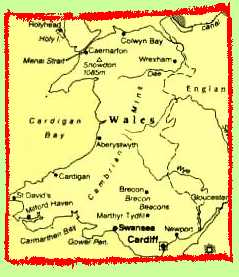
Farming, food production and tourism are important industries for Wales. The three
are intimately linked. The land, sea and rivers of Wales provide an amazing variety of fresh food for the size of the country. Snowdonia Mountains and Coast is an
enchanting area of contrast. St. David's peninsula is shaped like a triangle. It is bordered on both its northern and south side by steep cliffs and pebble beached
bays. On the northern side of the pensinsula almost vertical cliffs form an indented pattern.
St. Davids is the smallest city in Britain.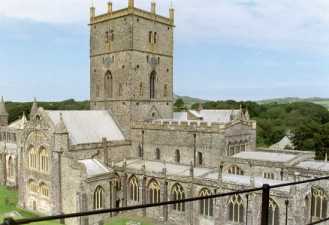 Its Cathedral was built in honour of a man who founded a monastery on the same site five hundred years earlier. Its Cathedral was built in honour of a man who founded a monastery on the same site five hundred years earlier.
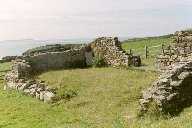
In the 6th century David settled there to teach his ascetic way of life. After his death several churches containing his shrine were built and
later destroyed. It was not until 1181 that the Normans, the ruling power of the time, recognizing the importance of David, began their
building of a permanent structure that was to take hundreds of years to complete.
 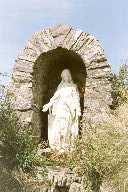
The architecture and style of the Cathedral has been added to throughout many centuries. The Cathedral is in cruciform shape. For almost a millennium and a
half St. Davids has been a place of pilgrimage.
Dore Abbey
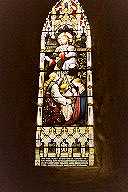
Dore, formerly a medieval Cistercian Abbey, is situated in Herefordshire. Twelve monks of the
Cistercian Order founded Dore in 1147. They chose a site near the River Dore - perhaps 'Dore' came from 'dwr' Welsh for water. 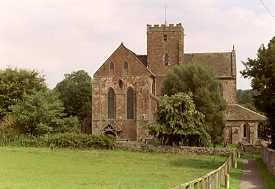 By the end of the 19th century Dore was in a bad state of repair. By the end of the 19th century Dore was in a bad state of repair.
Today Christian worship continues in the church as it has since 1147. Funds for the maintainance and repair are raised. The building is regularly used for events such as
concerts and plays. The Abbey's acoustics and architecture are famous.
TOP
|

